
The Big One: The Cascadia Earthquakes and the Science of Saving Lives
The Big One is a middle grade children’s picture book, which unpacks the potentially catastrophic earthquake zone just off the coast of the entire Pacific Northwest. To bring this project to fruition, I coached the photographers in the field and culled photos which documented the current activities around this hotbed subject. In addition, I researched and sourced historic photos of other earthquakes and tsunamis around the globe. As part of this research, I selected images of Japanese paintings as far back as the 1800s, which depicted great tsunami waves. With science-based children’s books, it’s critical to find visual materials, which illustrate the subject matter dynamically to keep kids’ attention.
Role: Photo Editor • Visuals Researcher & Strategy • Photo Coach
HMH Books for Young Readers (now Clarion Books)
ISBN-10 : 0544889045
ISBN-13 : 978-0544889040
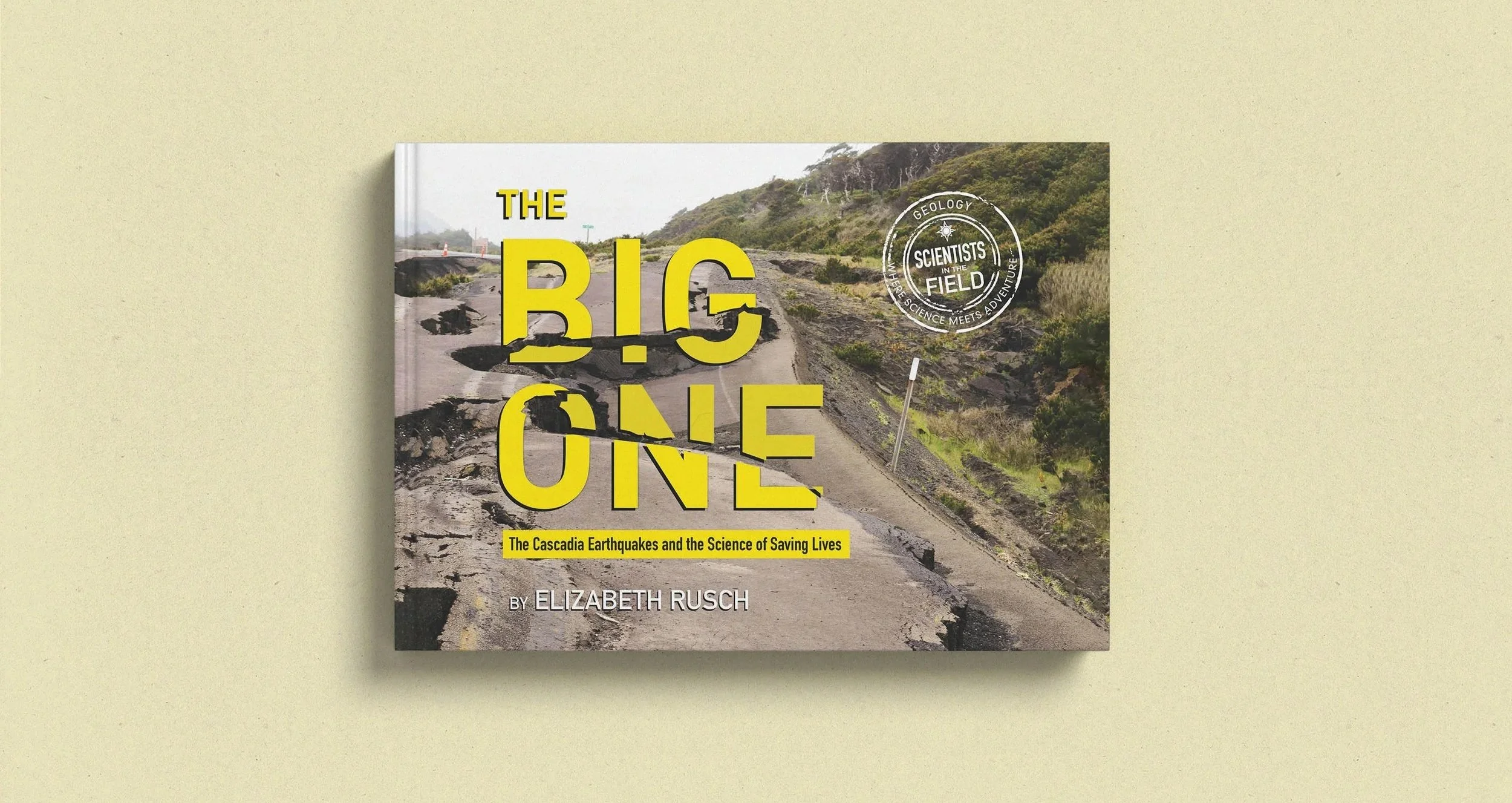
Author: Elizabeth Rusch
RECOGNITION
NSTA Outstanding Science Tradebook
CCBC Best Book of the Year
Junior Library Guild selection
Oregon Spirit Book Award
Layout & Photo Editing Decisions
Science titles live or die on their visuals: the right photos and art have to carry dense information and hold a middle‑grade reader’s attention. The following details dig into how I make those choices—what stays, what gets cut, and how I use composition, light, and historical art to strengthen a spread when the “perfect” image doesn’t exist.

When photographers make beautiful images, it helps make spreads look stunning. But as a picture editor, when there are too many good images to choose from, it can be heartbreaking when I have to edit out some of those beautiful images because they either don’t serve the story as a whole or they just can’t find a place in the flow of the visual story.

Very frequently, a particular image is needed for a specific purpose (here - to introduce this scientist), and there isn’t an image, which is emotionally compelling. As a result, other aspects of a photograph will serve in the stead of the emotion. In this case, I chose an image with soft, moody light and a slightly off-kilter composition. Light and composition communicate some drama which makes this spread more compelling.
This is why I always advocate photographers going out with some idea of what they need to communicate with the pictures they are making. It serves the story better, and ultimately helps make their job much easier.
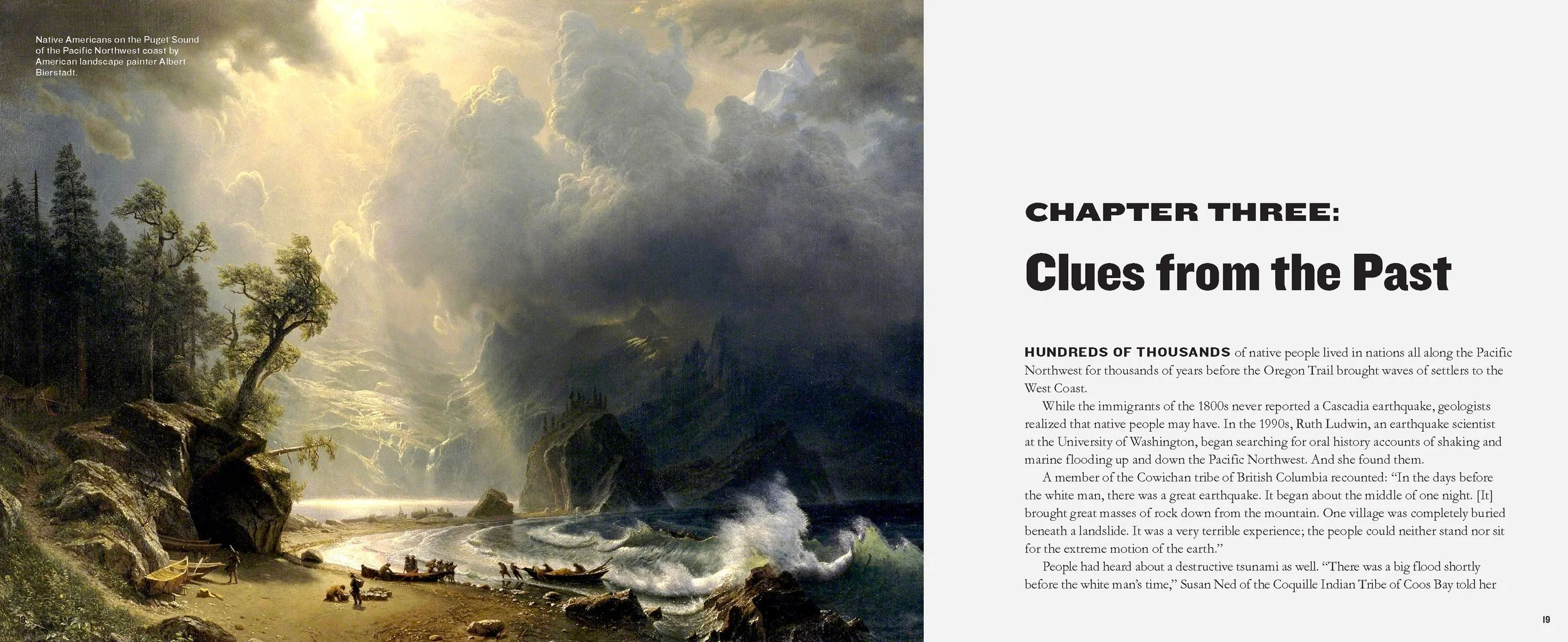
Part of a picture editor’s job is to find images, which serve different aspects of a story. Actual historic photographs may not be available, so thinking out of the box is warranted. In this case, the story is introducing how native peoples in the Pacific Northwest lived thousands of years ago.
I knew there had to be paintings of the area, which would capture this. This exquisite Bierstadt painting hit the nail on the head.
What People Are Saying
“The book is elaborately illustrated, often with full-page color photos of scientists and students at work, along with relevant and clearly presented maps and diagrams…” “A first-rate resource. Highly recommended…”
— School Library Journal, ★ Starred Review ★
“"[T]he information flow across chapters is exceptionally smooth and well organized. As customary for the Scientists in the Field series, the snapshot vibe of the generous photo illustration lends immediacy to the highlighted research."
— The Bulletin of the Center for Children's Books