
Impact! Asteroids and the Science of Saving the World
For this middle grade science book, I served as the lead photographer, traveling with author Elizabeth Rusch to observatories, impact sites, and research labs to document how scientists study near‑Earth asteroids and planetary defense. From all‑night vigils at Mt. Lemmon Observatory to meteorite hunts in the California desert, my images bring readers into the field and visually anchor the story’s big scientific ideas.
Role: Photographer
HMH Books for Young Readers
ISBN-10: 0544671597
ISBN-13: 978-0544671591
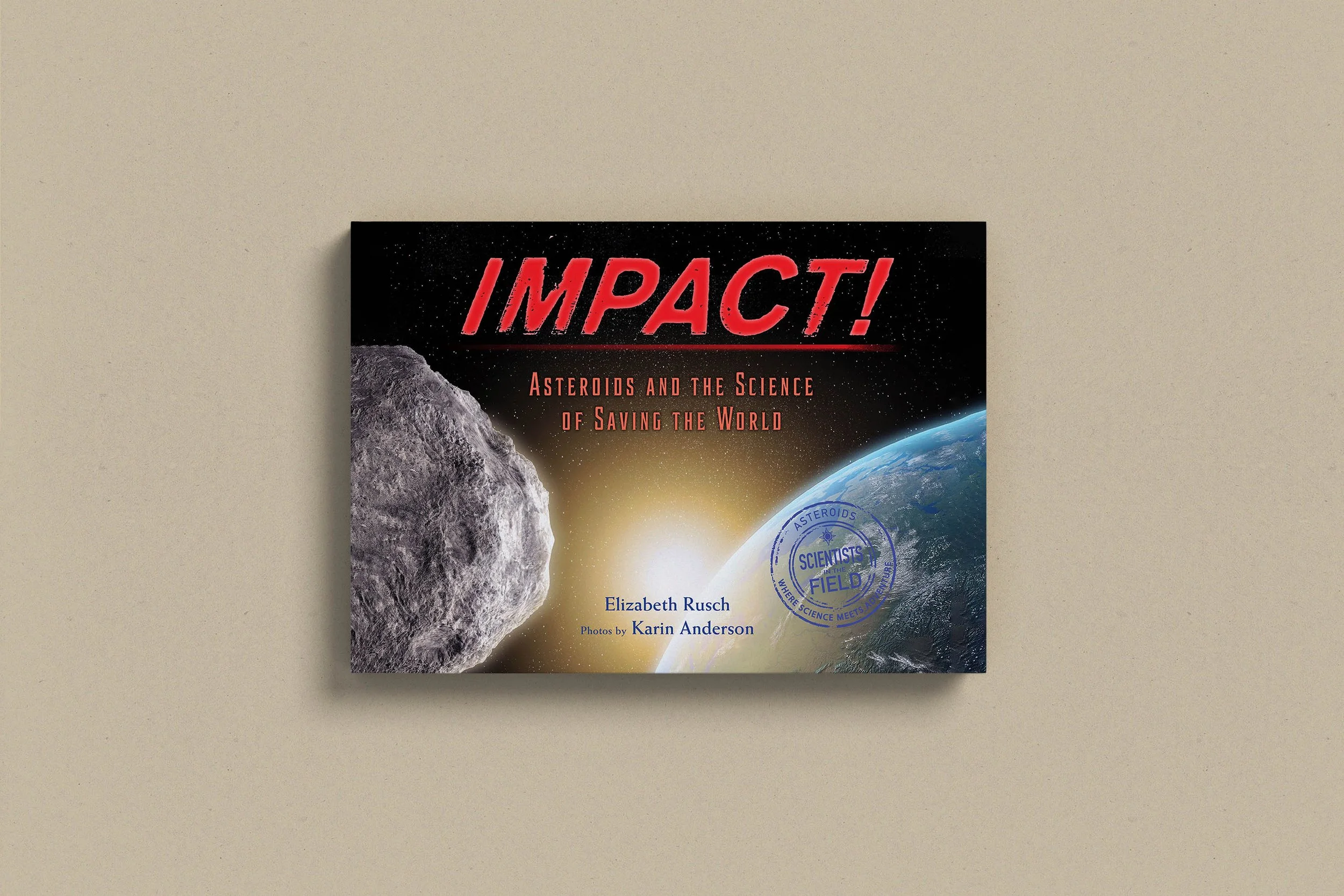
“Lavishly illustrated with Anderson’s photographs.”
— Kirkus
RECOGNITION
AAAS/Subaru Prize for Excellence in Science Books
Best Book of 2017 by School Library Journal
ALA (American Library Association) Notable
Bank Street Best Book of the Year
Junior Library Guild selection

The author and I hiked all day in a vast California ranch with a group of meteorite hunters and scientists looking for fragments after a known fall. Along the way we avoided herds of dangerous wild boar and deep boggy mud, but even after our long day of hunting, we didn’t find any meteorites.

I was wearing really old hiking boots. A NASA scientist had flown up from Houston to meet us and show us around the crater. We got about half way around when one of the soles of my boots literally fell off. I took another step and the second one fell off, too. So embarrassing! There was no more shooting that day. This shot is from the second day, after I went and bought new boots.
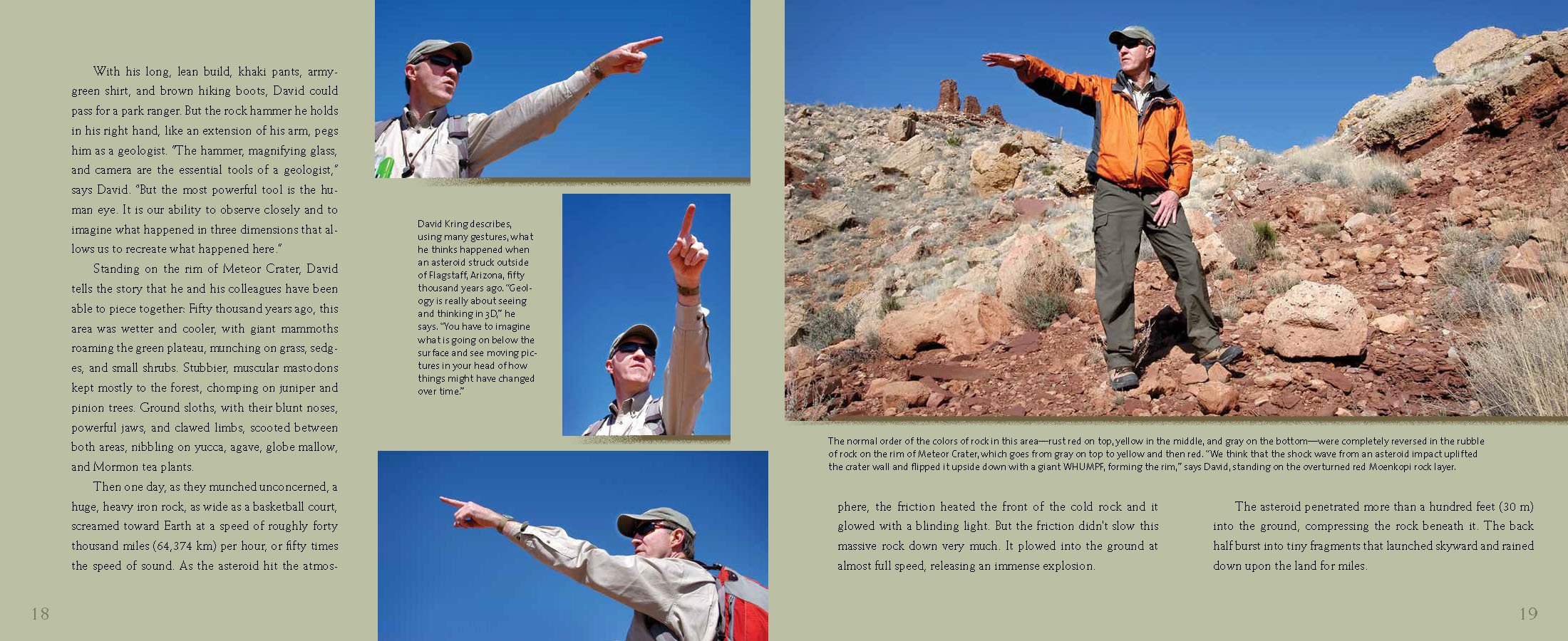
The scientist, David Kring, needed to point out lots of things in the area. This got kind of funny to shoot after a while. I came up with the idea for the book of using him as a graphic element, as he pointed in various directions. While it goes against one of my picture editing “rules” of not using literal images that depict action and have no other redeeming value, rules can be broken if you have a purpose for doing so. In this case, turning him into a weathervane broke up the text, and provided a little visual comic relief.
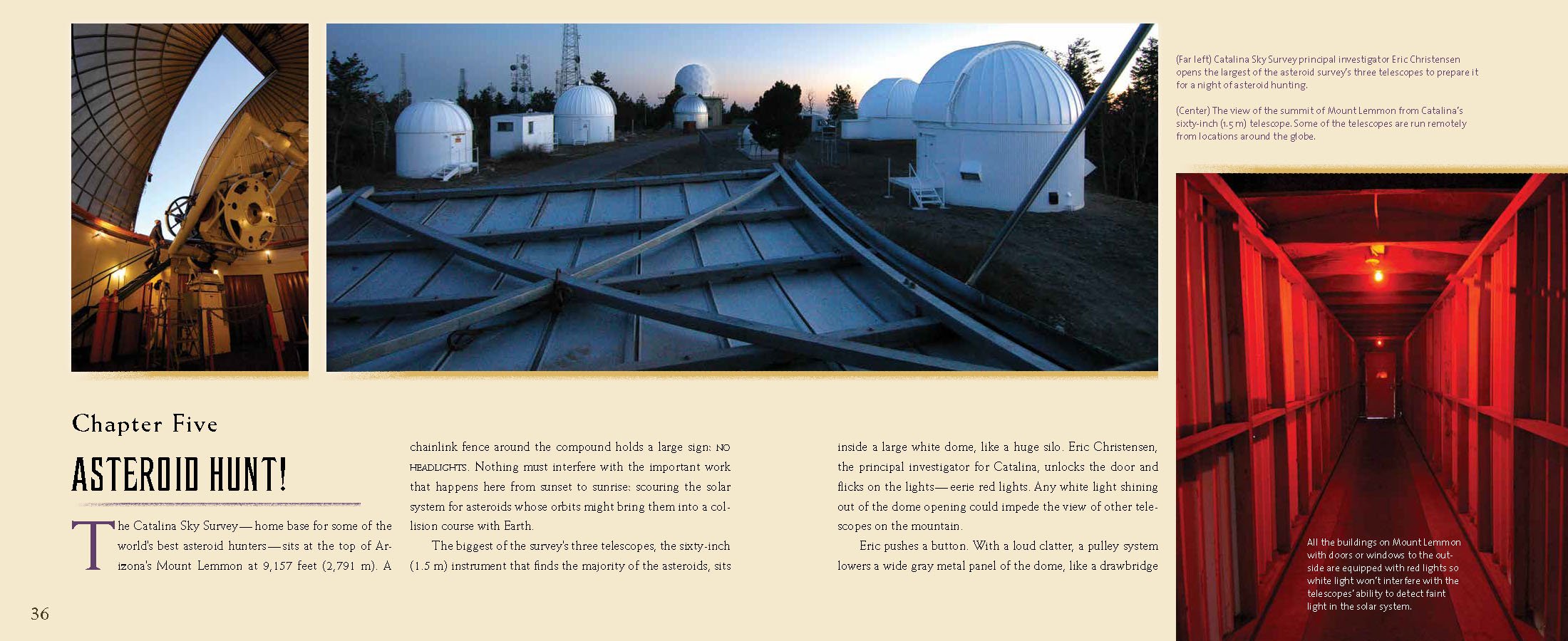
This was the observatory at Mt Lemmon. We stayed up most of the night to document the process of searching for near-earth asteroids, which might one day smash into the Earth. The red light used in the tunnel back to the bunker is the only color of light, which does not interfere with the night sky and the telescope’s ability to “see.” I ended up running out of things to shoot, so I went back to the bunker earlier than the author, but I was duly warned to make a LOT of noise as I walked back — because of all the mountain lions!
Obviously, they didn’t get me.
What People Are Saying
“The accompanying photos and graphics are both informative and appealing. Compelling reading.”
— School Library Journal, ★ Starred Review
"Accompanied by photographs of scientists in action and requisite space shots, the book concludes with citizen science connections and resources, and is sure to have an impact on young astronomers."
— Booklist
“Fascinating…vivid…excellent.” “…vivid photographs…”
— The Horn Book